
Why Budget Flats Are the Riskiest Category: What Buyers Often Ignore
Budget flats are often marketed as the safest entry point into home ownership. Lower prices, smaller down payments, and easy EMI calculations make them attractive, especially for first-time buyers. However, many buyers discover later that the lowest-priced option can carry the highest long-term risk.
Understanding why budget flats are the riskiest category is not about discouraging affordability, but about helping buyers recognise compromises that are easy to overlook at the time of purchase.
Why Budget Flats Look Attractive to Buyers?
Budget flats appeal strongly to buyers who want to own a home quickly and within a limited budget. Lower prices create a sense of security and achievement, especially in a market where property ownership is emotionally important.
For many buyers in India, affordability feels like safety. The assumption is simple: if the flat is cheaper, the risk must be lower. Unfortunately, real estate does not always work that way. What appears affordable upfront can become costly over time due to location, quality, or resale limitations.
What Are the Hidden Risks of Budget Flats?
The biggest budget flats risks are rarely visible during site visits or sales discussions. Issues often surface only after possession—maintenance problems, poor construction finishing, or unexpected expenses.
Many buyers also underestimate how small compromises add up. Limited ventilation, lack of proper amenities, or poor neighbourhood planning may not seem critical initially, but they affect daily living for years. These hidden problems explain why cheap flats problems are often discussed only after buyers move in.
Location Compromises in Budget Housing Projects?
Location is one of the most common compromises in buying budget flats in India. To keep prices low, many budget housing projects are built in peripheral or underdeveloped areas.
While future infrastructure is often promised, buyers may have to live for years with poor connectivity, limited public transport, and lack of essential services. Over time, long commutes and weak neighbourhood development can reduce both lifestyle comfort and resale demand.
Distance From Core Employment Zones
To keep prices low, budget housing projects are often located far from major business districts and commercial hubs. Daily commuting becomes time-consuming and expensive, which gradually reduces the property’s practical value for working professionals.
Incomplete Social Infrastructure
Many budget projects launch before essential facilities like schools, hospitals, markets, and public transport are fully developed. While future growth is promised, buyers may have to manage daily life with limited access to basic services for years.
Poor Connectivity and Transport Dependence
Budget housing locations frequently depend on proposed roads or transport links. Until these are completed, residents rely heavily on personal vehicles or irregular public transport, making everyday travel inconvenient and unpredictable.
Neighbourhood Quality and Surroundings
Lower land costs often mean less regulated surroundings, including industrial activity, vacant land, or unplanned developments. These factors affect safety, cleanliness, and long-term desirability of the area.
Construction Quality Issues in Budget Flats?
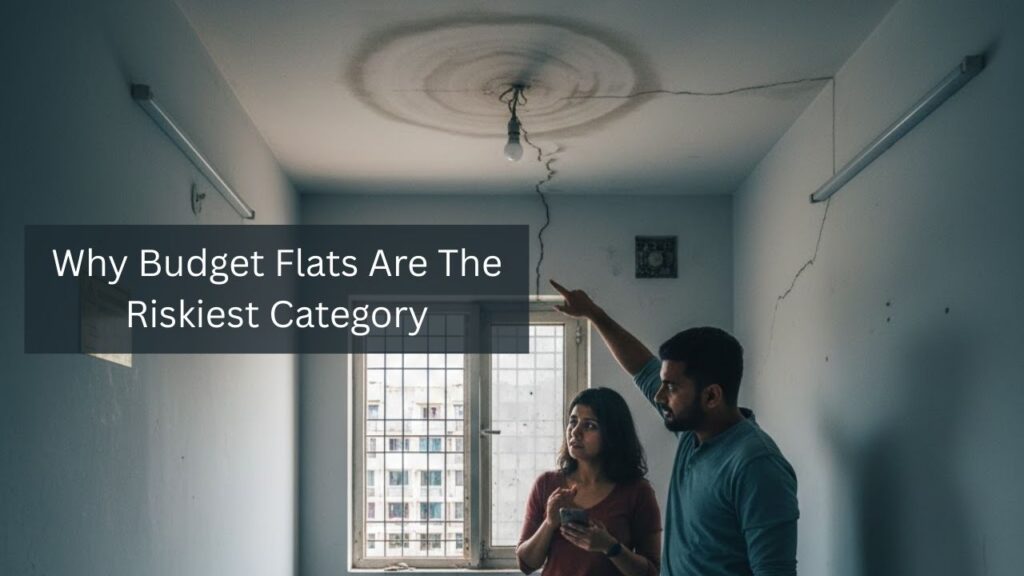
Construction quality is another area where cost-cutting becomes visible. To meet lower price points, materials, fittings, and workmanship are often compromised.
Problems like seepage, cracks, frequent repairs, or rapid wear and tear are not uncommon. While these issues may not make headlines, they gradually increase maintenance costs and frustration. Cheap flats problems are rarely about one big failure, but about continuous small inconveniences that accumulate over time.
Why Budget Flats Often Struggle With Resale Value?
One of the biggest long-term risks is resale. Budget flats usually attract price-sensitive buyers, which limits demand in the resale market.
When buyers later try to upgrade or relocate, they often find fewer interested buyers and limited price appreciation. In stable markets, resale value depends heavily on location quality, construction durability, and community environment—areas where budget flats often fall short.
This is why many owners struggle when asking themselves whether they should exit or hold the property longer than planned.
Limited Buyer Demand in the Resale Market
Most budget flats attract first-time, price-sensitive buyers. In the resale market, this limits demand because buyers usually prefer either very cheap new projects or slightly better mid-segment homes. Budget flats often fall in between, making them harder to sell.
Location Becomes a Bigger Problem Over Time
Many budget flats are built in areas chosen mainly to keep prices low. If infrastructure development is slower than expected, connectivity and neighbourhood appeal remain weak. Over time, this directly affects resale interest and pricing power.
Visible Wear and Tear Reduces Perceived Value
Construction quality compromises may not show immediately, but after a few years, issues like seepage, cracks, and frequent maintenance become visible. Buyers comparing resale options often prefer better-built properties, even if they cost slightly more.
Low Appreciation Leaves Little Pricing Flexibility
Budget flats usually experience slower price appreciation. When owners try to resell, they often cannot price the property much higher than their purchase cost, especially after factoring in registration, taxes, and maintenance expenses.
Budget Flats vs Mid-Segment Homes – Risk Comparison?
When comparing budget flats to mid-segment homes, the difference is not just price, but overall risk exposure. Mid-segment homes usually offer better locations, stronger construction standards, and higher resale demand.
While the entry cost is higher, the long-term stability is often better. Buyers who stretch slightly for quality often experience fewer surprises compared to those who choose the lowest-priced option available.
This comparison is important for anyone questioning should you buy a budget flat or explore better alternatives within reach.
Construction & Longevity Risk
Budget flats are built with tight cost controls, which often leads to compromises in materials, finishing, and long-term durability. While this may not be obvious initially, maintenance issues tend to surface within a few years. Mid-segment homes, on the other hand, usually follow better construction standards, reducing the risk of early repairs and structural concerns.
Location & Infrastructure Risk
Budget housing projects are commonly located in developing or peripheral areas where infrastructure growth is uncertain. If promised roads, transport, or civic facilities are delayed, the property’s usability and value suffer. Mid-segment homes are generally placed in more established or semi-developed locations, lowering the risk of isolation and poor connectivity.
Financial Flexibility & Resale Risk
Budget flats have limited resale demand because they target a narrow buyer group. Owners often struggle to upgrade or exit without sacrificing price. Mid-segment homes attract both end-users and investors, offering better resale flexibility and a more stable exit option.
Lifestyle & Living Risk
Over time, cramped layouts, limited amenities, and higher population density in budget projects can impact daily living quality. Mid-segment homes usually offer better planning, open spaces, and community facilities, reducing lifestyle-related dissatisfaction in the long run.
Why Budget Flats Can Be Riskier in Cities Like Kolkata?
In cities like Kolkata, price appreciation is generally steady rather than aggressive. This means buyers cannot rely on rapid value growth to compensate for compromises.
Many budget flats in Kolkata are located in areas where infrastructure development takes time. If location quality does not improve as expected, both livability and resale potential remain limited. In such markets, practicality and location strength matter more than simply finding the cheapest flat.
Slow Infrastructure Execution Compared to Promises
In Kolkata, many budget housing projects depend heavily on future infrastructure announcements—new roads, metro extensions, or township development. While plans are announced, execution often takes longer than expected. Buyers who enter early expecting quick growth may find themselves stuck in underdeveloped areas for years.
Waterlogging and Drainage Challenges
Several budget projects are developed on low-lying land at the city’s outskirts where land is cheaper. In a city like Kolkata, where heavy monsoons are common, poor drainage and waterlogging can become a serious long-term issue, directly affecting livability and resale appeal.
Legal and Land History Complications
Kolkata has many areas with complex land ownership histories, especially in fringe locations. Budget projects sometimes cut corners in due diligence to keep prices low. This increases the risk of documentation delays, approvals, or future legal disputes.
Overcrowding and Poor Maintenance Culture
Budget flats often have high density with limited maintenance budgets. Over time, common areas, lifts, and basic services start deteriorating. In Kolkata’s humid climate, lack of regular upkeep accelerates wear and tear, impacting both comfort and property value.
Limited Upgrading and Exit Options
In Kolkata’s resale market, buyers are extremely price-conscious. Budget flats rarely move up the value ladder, making it difficult for owners to upgrade without financial strain. This reduces flexibility if your lifestyle or space needs change.
Should You Buy a Budget Flat or Look for Better Alternatives?
The answer depends on personal priorities, but buyers should be clear about trade-offs. Budget flats may solve short-term affordability issues, but they often introduce long-term risks related to quality, location, and exit flexibility.
For many buyers, exploring slightly better locations, resale properties, or smaller mid-segment options can provide more peace of mind. A home should reduce financial and emotional stress, not add to it.
